What Newark Airbnb and Short-Term Rental Hosts Need to Know About Bed Bugs
Quick Answer
If an Airbnb guest reports bed bugs in your Newark, NJ listing, take the listing offline immediately, respond to the guest in writing within 24 hours, document the complaint with photos, and schedule a professional inspection the same day or next morning. Do not relist until a professional inspection confirms the unit is clear or heat treatment has been completed and documented.
Newark’s short-term rental market has grown substantially in recent years. Properties near Newark Penn Station, in the Ironbound, and along the downtown corridor attract business travelers, international visitors, and visitors coming for Newark Liberty Airport connections. This is a solid business opportunity. It also creates a specific bed bug exposure profile that most hosts underestimate until they get their first complaint.
This post covers the three stages every active Newark Airbnb host will eventually face: prevention between guest stays, responding correctly when a guest reports a problem, and treating and relisting with documentation that protects your Superhost status.
Stage 1: Prevention
Short-term rentals have higher bed bug exposure than traditional long-term rentals for one straightforward reason: more guests means more contact with infested luggage and clothing from more locations. A guest arriving from a city with an active infestation in their bag introduces bed bugs. Another guest leaves carrying them. The next guest checks in and gets bitten. By the time you receive a complaint, the infestation may have been building for weeks.
Mattress Encasements
Install quality bed bug-proof encasements on every mattress and box spring in the listing. This is the single most effective passive defense available. Encasements trap any bugs already present, prevent new bugs from reaching the mattress interior, and make it far easier to inspect the sleeping surface between stays. Replace encasements that develop tears or damaged zippers immediately.
What to Check During Every Turnover
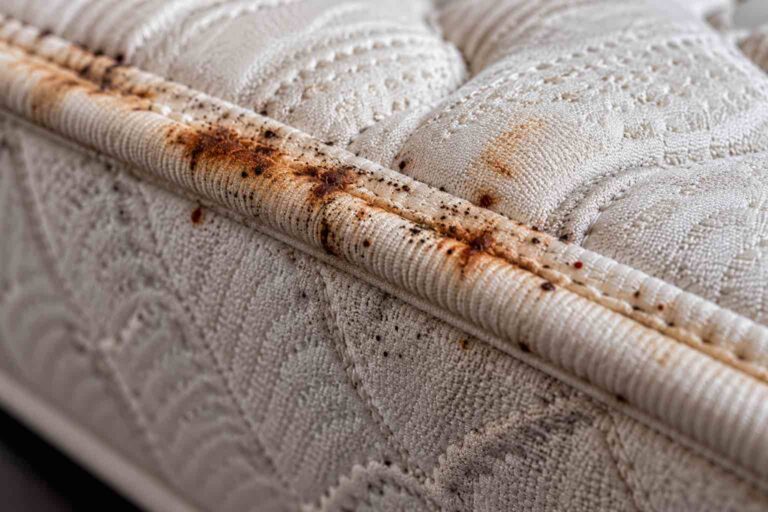
Add a quick 3-minute check to your turnover protocol after each checkout. Check the mattress encasement surface for any staining. Inspect the pillowcase surface near the head of the bed. Look at the baseboard nearest the bed. None of these checks takes more than a minute each, and catching an early-stage infestation between guests is the best outcome possible: small populations are treated faster and less expensively than established ones.
Luggage Rack Placement
Provide a luggage rack in the unit and place it on the opposite side of the room from the bed. Guests who set luggage on or near the bed create a direct transfer pathway. A luggage rack away from the sleeping area does not eliminate the risk but it reduces the most common transfer mechanism.
Stage 2: Guest Complaint
A guest reports a bite or sighting. The next 24 hours determine whether this becomes a manageable situation or a Superhost-status threatening crisis.
How to Respond to the Guest
Respond in writing within 24 hours, ideally faster. Acknowledge the report seriously without admitting fault. Do not dismiss the complaint or suggest the guest may be mistaken. Your message should confirm you are taking the report seriously, that you are scheduling an inspection immediately, and that you will follow up with findings. Keep the communication on the platform so all correspondence is documented for any dispute resolution.
How to Document the Complaint
Screenshot the guest’s message immediately. If they provide photos, save them. Note the date and time of the report. Create a log entry in your property management file with the complaint details, your response, and every subsequent action you take. This documentation is what protects you if Airbnb initiates a complaint review or if the guest escalates.
Taking the Listing Offline
Block your calendar immediately after receiving the complaint, before the inspection is completed. Do not accept new bookings while the investigation is underway. Continuing to host while an active infestation complaint is unresolved exposes you to a second complaint from a new guest, which makes the situation significantly worse and is harder to resolve with Airbnb.
How to Protect Your Superhost Status
Airbnb’s policy on pest-related complaints focuses on host responsiveness and documentation of remediation. A host who responds quickly, documents the inspection, completes professional treatment, and provides evidence of the resolution is in a fundamentally different position than a host who ignores the complaint or takes weeks to respond. Speed and documentation are your protection. A professional inspection report dated within 24 to 48 hours of the complaint is strong evidence of good-faith response.
Stage 3: Treatment and Relisting
Heat treatment is the preferred option for short-term rentals in Newark for three specific reasons. First, it eliminates all life stages including eggs in a single treatment, which means you are not managing a multi-week chemical treatment protocol while your listing is offline. Second, it leaves no chemical residue, which means there are no concerns about guests with chemical sensitivities returning to the unit. Third, in most cases the unit is ready for re-occupancy the same day after the space cools, keeping your offline period to one day rather than days or weeks.
For a downtown Newark property or an Ironbound listing near Penn Station with multiple near-term bookings, the difference between a same-day heat treatment result and a 4-week chemical protocol is the difference between minimal revenue loss and significant damage to your income. Heat treatment for short-term rentals is not primarily a pest control choice. It is a business continuity choice.
Documentation for Airbnb Dispute Resolution
After heat treatment is complete, collect the following documents for your file: the professional inspection report with date and findings, the treatment agreement, the heat treatment completion report from the technician confirming temperatures reached and duration, and the follow-up inspection result at 14 to 21 days. If Airbnb’s Resolution Center opens a dispute, this file is the basis for your defense. We provide all of this documentation as standard with every job.
How to Communicate the Resolution to Concerned Guests
A guest who had a bed bug complaint and was appropriately refunded or relocated needs to know what you did to resolve the situation before they consider rebooking. A brief, factual message explaining that a licensed specialist conducted an inspection and heat treatment, the unit was confirmed clear, and you have updated your prevention protocols is the professional standard. Do not over-explain or apologize repeatedly. State the facts and offer to answer any questions.
Quarterly Inspection Programs for Active Hosts
The most effective way to avoid a guest complaint is to catch infestations before a guest does. Quarterly professional inspections for active short-term rental properties in Newark give you a dated inspection report every three months confirming the unit is clear. This is not a large expense relative to the revenue a Newark listing generates. It is also a direct conversion mechanism from a one-time treatment client to a recurring relationship with a pest control specialist who knows your property well.
Quarterly inspections combined with mattress encasements and the turnover checklist above give active Newark hosts a meaningful, documented bed bug prevention program. Call (973) 327-0081 to discuss a quarterly program for your property.
New Jersey Law and Short-Term Rentals
New Jersey’s Hotel and Multiple Dwelling Law (N.J.S.A. 55:13A) covers hotels and properties rented to guests. Short-term rental operators who rent a unit on a regular basis through platforms like Airbnb may be subject to local short-term rental ordinances in Newark and to the habitability requirements of N.J.S.A. 55:13A and the warranty of habitability statutes. A guest who sustains a documented bed bug injury at your property may have a civil claim. The documentation of a prompt, professional response and documented treatment is your protection. Consult an attorney for guidance specific to your property structure and rental frequency.
For more on the inspection and heat treatment process, visit the bed bug inspection page and the heat treatment page. The EPA bed bug resource page provides additional background on treatment methods and host responsibilities.
Frequently Asked Questions
Respond in writing within 24 hours, take the listing offline, schedule a professional inspection immediately, and document everything. After inspection, complete treatment if confirmed and collect the full treatment documentation before relisting. Speed and documentation are the two factors that determine whether this situation is manageable or damaging.
Heat treatment takes 6 to 8 hours on-site. The unit is ready for re-occupancy the same evening after cooling, typically 10 to 12 hours after treatment begins. Compare this to a chemical treatment protocol, which requires 2 to 3 visits over 3 to 4 weeks with extended vacancy after each application. For an active short-term rental, heat treatment is the operationally superior choice.
Airbnb’s policy focuses on host responsiveness and documented remediation rather than penalizing for the complaint itself. Hosts who respond promptly, document the inspection and treatment, and provide evidence of the completed remediation are treated materially differently than hosts who ignore complaints or take extended time to respond. Hosts who fail to act on a documented complaint risk listing suspension.
Quarterly inspections are the standard recommendation for properties with consistent guest turnover. An inspection every 3 months catches early-stage infestations before a guest does, generates dated documentation of a clean property, and keeps the per-inspection cost low by avoiding the larger treatment costs associated with established infestations. Call (973) 327-0081 to set up a quarterly inspection program for your Newark listing.